
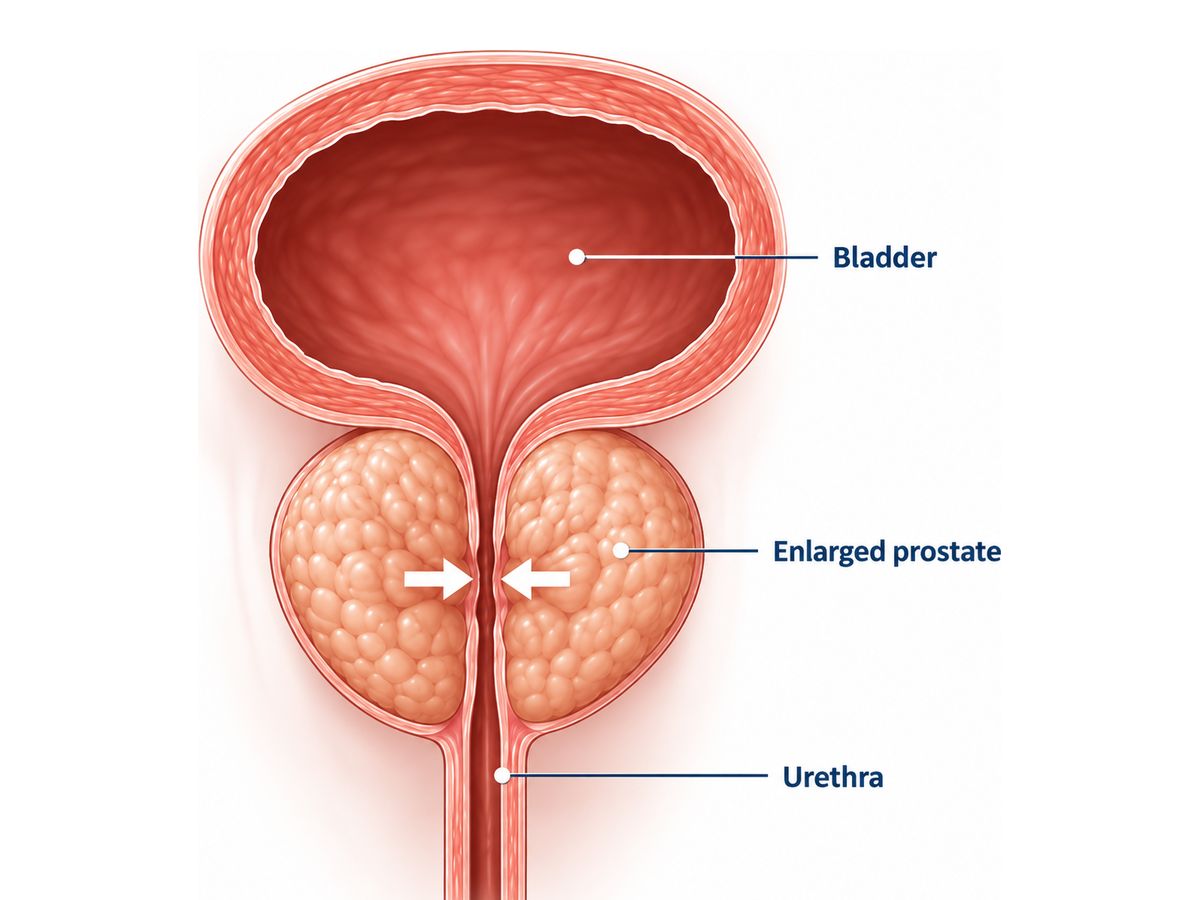
Benign Prostatic Hyperplasia (BPH)
A non-cancerous enlargement of the prostate that may affect urine flow and cause changes in urinary habits.



Changes in urinary habits can be so gradual that they barely register as a problem. A weaker stream or more frequent trips to the toilet may simply become part of someone’s routine. However, even seemingly minor changes can sometimes indicate an underlying prostate condition and should not automatically be dismissed as part of ageing.
Changes in the prostate can arise for different reasons, and identifying the underlying condition is important in determining whether treatment is needed.
A non-cancerous enlargement of the prostate that may affect urine flow and cause changes in urinary habits.
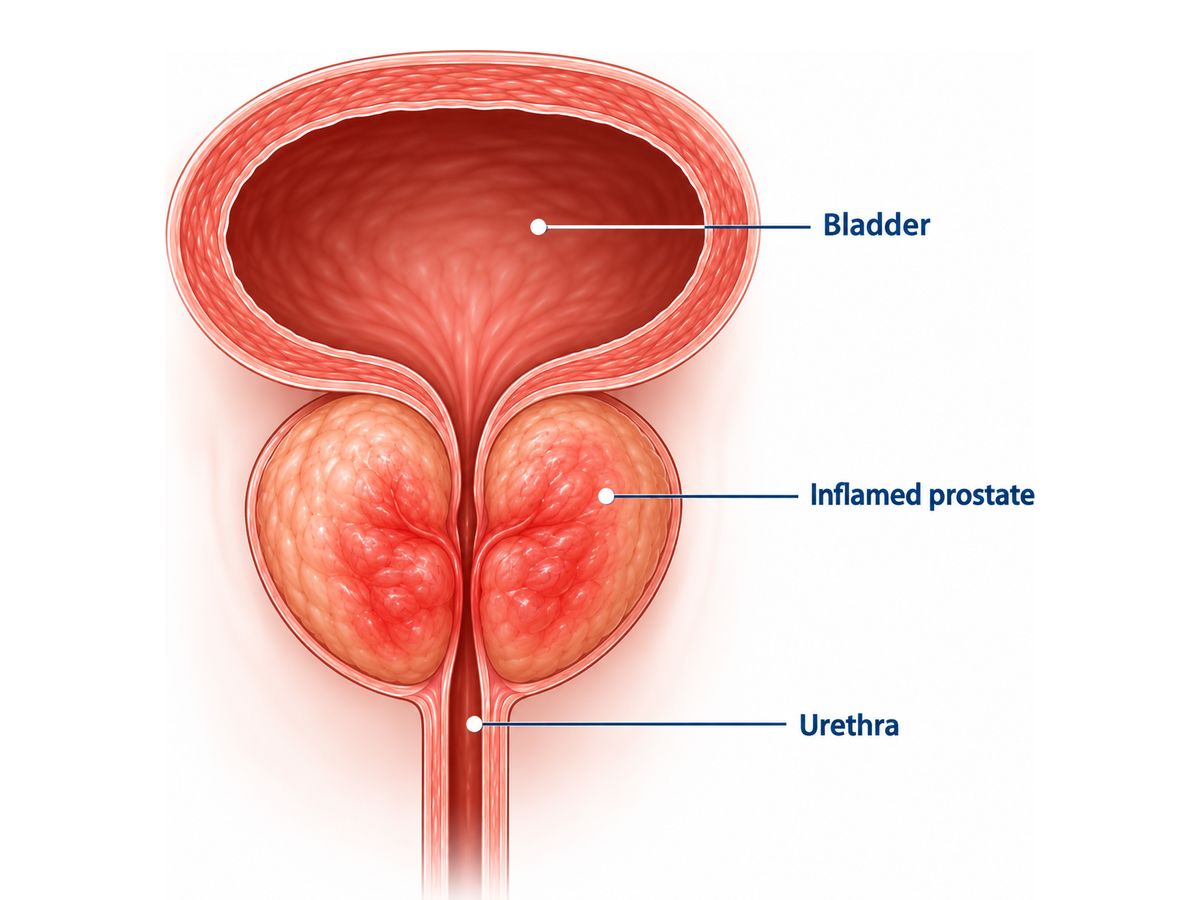
Inflammation of the prostate that may cause pelvic discomfort, painful urination or changes in urinary habits.
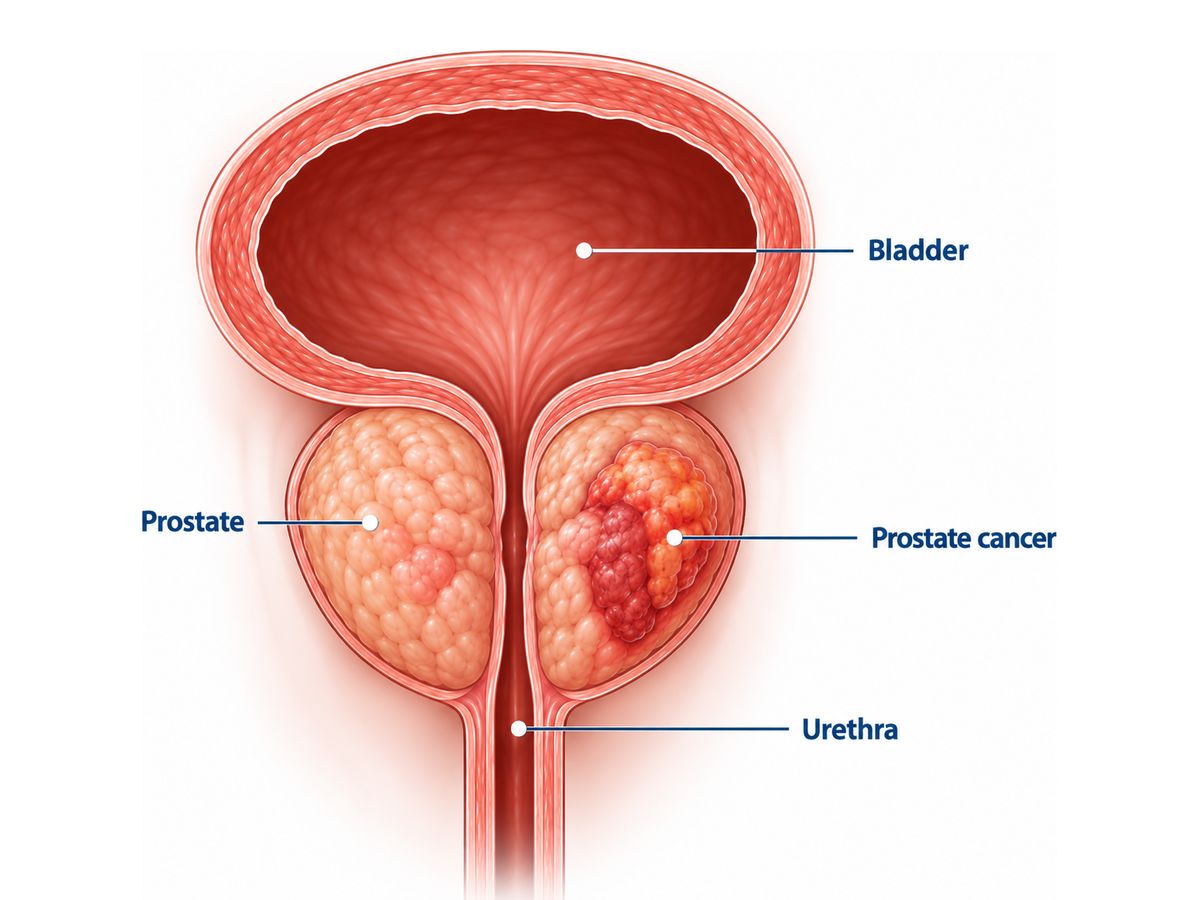
Abnormal cell growth within the prostate that may develop without noticeable symptoms, particularly in its early stages.
Changes in urinary habits may develop gradually, making them easy to overlook. Other symptoms, such as pelvic discomfort or pain during urination, may become noticeable more suddenly.
These symptoms can have causes beyond the prostate and do not necessarily indicate a serious condition. Some prostate conditions, particularly early prostate cancer, may also develop without noticeable symptoms.
If you’ve experienced changes in urination or persistent discomfort, an assessment can help identify the possible cause.
Similar symptoms can arise from different prostate and urinary conditions. Assessment helps establish the underlying cause and determine whether treatment is necessary, taking into account the diagnosis, clinical findings and how the condition is affecting you.
Symptoms, examination findings and relevant investigations
Based on the diagnosis, clinical findings and individual needs
Observation and follow-up where appropriate
Medical treatment suited to the condition
Intervention when clinically indicated
Changes in urinary habits or persistent pelvic discomfort may warrant medical assessment, particularly when they begin to affect daily activities. You do not need to wait until symptoms become severe to seek advice.
Certain symptoms require more prompt attention:
Men with a family history of prostate cancer may also benefit from discussing screening with a doctor, even without symptoms.
Dr Jonathan Teo’s clinical experience includes surgical treatment for benign prostatic hyperplasia (BPH), with minimally invasive BPH procedures among his areas of special interest.
Dr Teo has published academic articles on BPH treatment during his time in Singapore’s public healthcare sector, alongside his clinical work in urology.
His academic appointments include teaching roles at NUS, Duke-NUS and NTU, as well as training urology residents through the SingHealth Urology Residency Programme.
Dr Teo helped establish the Urology Department at Sengkang General Hospital in 2018, contributing to the development of specialist urological services at the hospital.

Medical Director & Consultant Urologist
MBBS (S’pore), MRCS (Edin), FRCS-Urol (Glas), FAMS (Urol)
Dr Jonathan Teo is the medical director and consultant urologist at Urology Practice, with extensive experience in managing prostate conditions, including benign prostatic hyperplasia (BPH) and prostate cancer. His clinical background includes serving as a consultant urologist at Singapore General Hospital, where he was also Director of Andrology.
His experience in BPH surgery and minimally invasive treatments allows him to discuss a range of management options with patients whose symptoms are not adequately controlled by medication. Treatment recommendations take into account symptom severity, bladder function and whether a procedure is appropriate for the individual’s condition.
Noticing changes in your urinary habits is reason enough to seek medical advice, even if the cause or need for treatment is unclear. Schedule a consultation today.
3 Mount Elizabeth, #04-09
Mount Elizabeth Medical Centre,
Singapore 228510
820 Thomson Road, #03-08
Mount Alvernia Medical Centre A,
Singapore 574623
Operating Hours
Closed on Sundays and Public Holidays