
Prostate Treatments

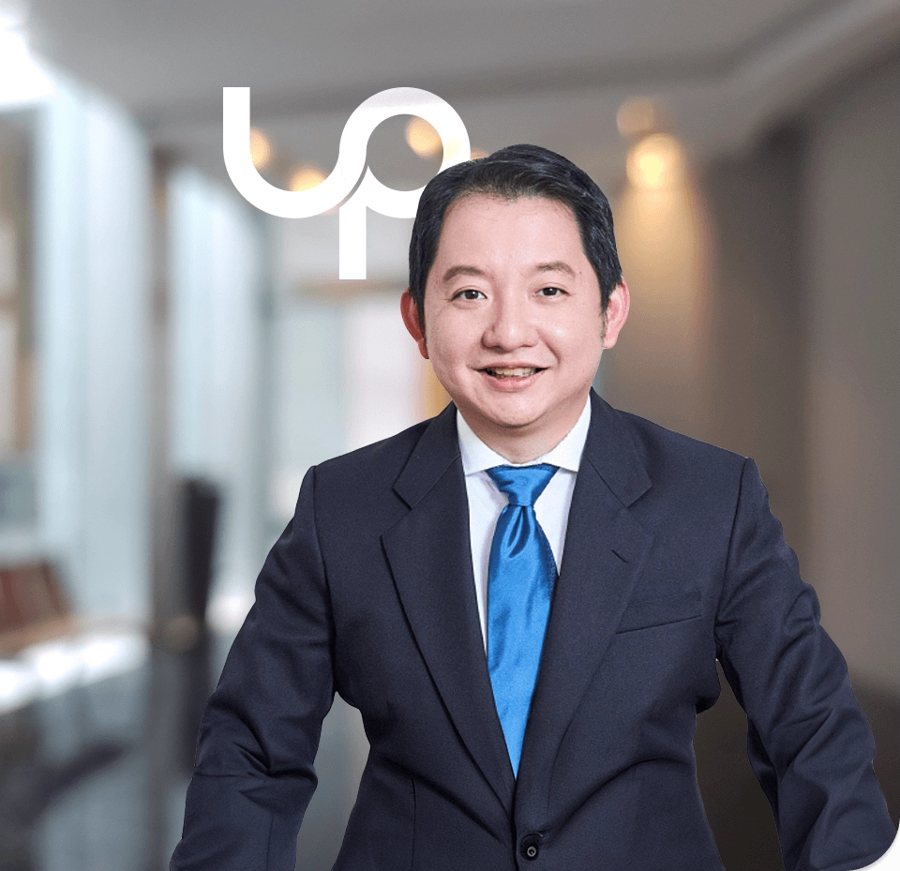
Dr Jonathan Teo
Dr Jonathan Teo
Medical Director & Consultant Urologist
MBBS (S’pore), MRCS (Edin), FRCS-Urol (Glas), FAMS (Urol)

Finding the Right Approach to Prostate Treatment

Prostate conditions can become more difficult to manage when they progress or begin causing complications. Addressing them at an appropriate stage may help prevent avoidable problems and preserve quality of life.

At our clinic, Dr Jonathan Teo provides care for men with prostate conditions, with treatment recommendations guided by the diagnosis and its impact on their health.

A doctor pointing to the prostate on an anatomical model of the bladder and prostate

What Influences Your Treatment Options?

Treatment decisions consider the nature of the condition alongside factors that may affect its management. Several factors may influence the decision:

Severity and progression

Worsening urinary symptoms, complications or evidence of disease progression may warrant more active treatment.

Clinical findings

Prostate size, the degree of urinary obstruction or the characteristics of a diagnosed cancer can influence which options are suitable.

Overall health

Existing medical conditions and fitness for a procedure may affect treatment recommendations.

Personal priorities

Concerns about recovery, potential side effects and the impact on sexual function may influence treatment choices.

Care That Responds to What Your Body Needs

Your condition deserves attention that goes beyond a standard treatment plan. Dr Jonathan Teo considers how your prostate condition affects you when recommending an appropriate course of care.

Treatment for BPH

Treatment for BPH focuses on relieving urinary difficulties caused by prostate enlargement and reducing the risk of complications. The approach depends on how much bladder function and everyday activities are affected.

Conservative Treatment

Monitoring and Lifestyle Adjustments

Mild symptoms may be managed through regular monitoring and changes to everyday habits. These may include:

  • Adjusting fluid intake before bedtime
  • Limiting caffeine or alcohol
  • Reviewing medications that could aggravate urinary difficulties

Medication

Medication may be recommended when urinary symptoms become more troublesome. Common options include:

  • Alpha-blockersRelax muscles around the prostate and bladder neck to improve urine flow.
  • 5-alpha-reductase inhibitorsReduce the hormonal activity responsible for prostate growth and may gradually shrink the gland.

These medications work differently and may sometimes be prescribed together.

Procedural Treatment

Procedures may be considered when symptoms remain troublesome despite medication or when complications such as urinary retention occur. The techniques differ in how they relieve obstruction, with some repositioning enlarged tissue and others removing or reducing it.

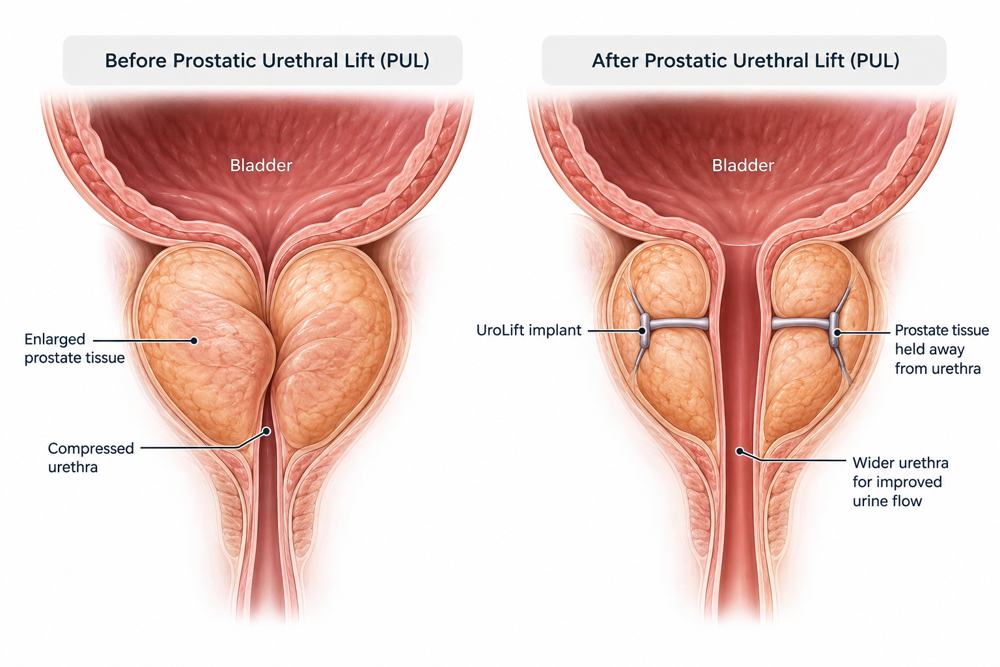
Before and after a prostatic urethral lift, showing implants holding prostate tissue away from the urethra

Prostatic Urethral Lift (PUL)

A prostatic urethral lift uses small implants to hold enlarged prostate tissue away from the urethra, widening the passage for urine. The procedure does not involve cutting or removing prostate tissue and may be suitable for selected patients, depending on prostate anatomy.
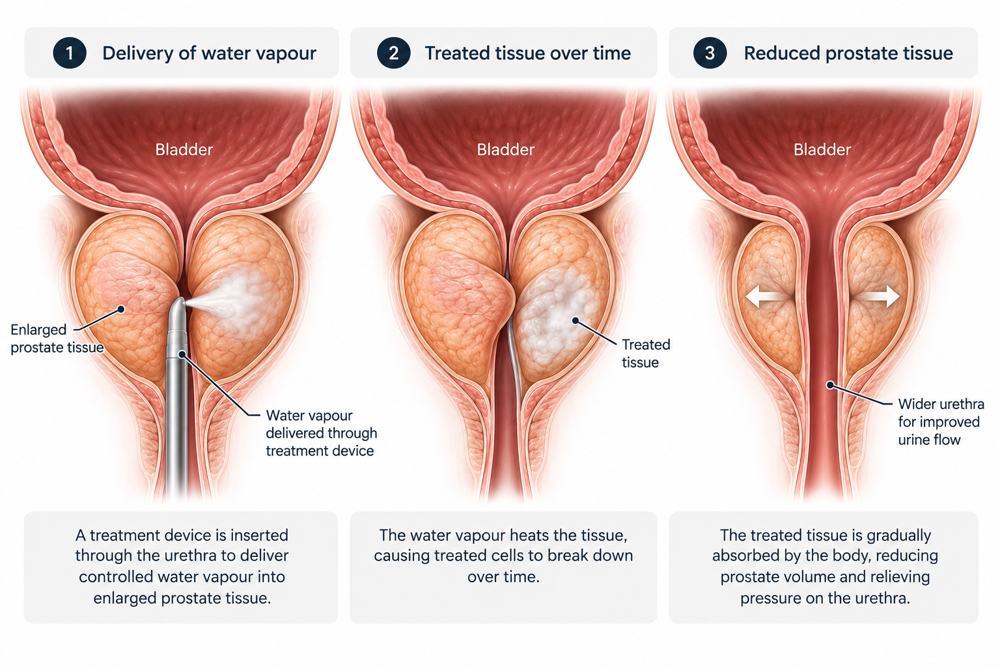
Three stages of water vapour therapy reducing enlarged prostate tissue

Water Vapour Therapy

Water vapour therapy delivers controlled steam into enlarged prostate tissue through an instrument inserted into the urethra. The treated tissue gradually reduces in volume as the body absorbs it, helping relieve pressure on the urinary passage.

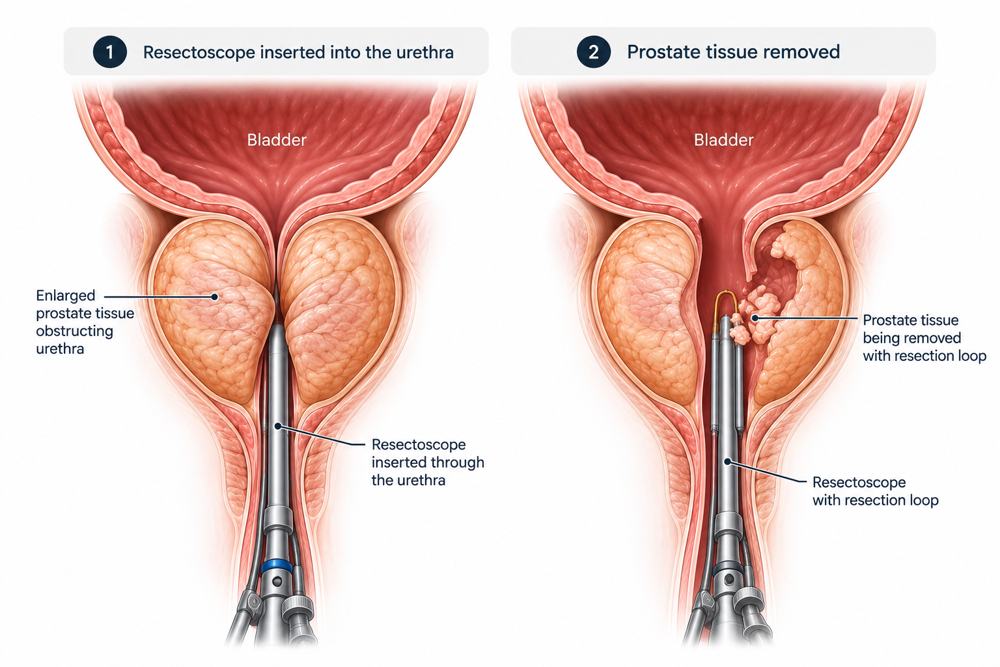
Resectoscope removing obstructing prostate tissue during TURP

Transurethral Resection of the Prostate (TURP)

TURP involves passing a surgical instrument through the urethra to remove prostate tissue obstructing urine flow. It is an established surgical option for BPH and does not require an external incision.

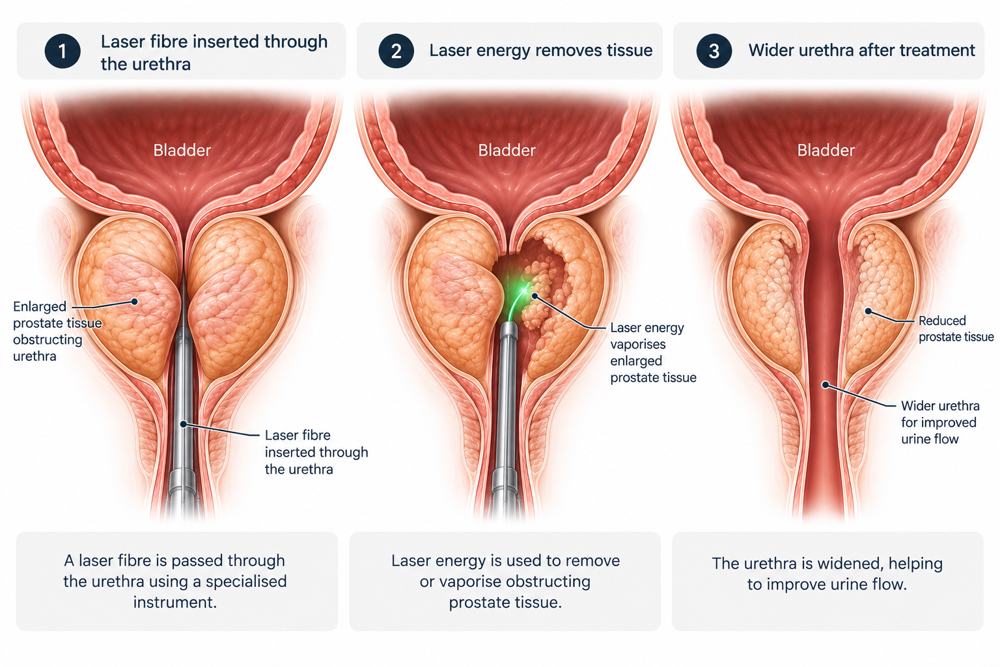
Laser fibre removing obstructing prostate tissue and the widened urethra afterwards

Laser Surgery

Laser techniques can remove or vaporise enlarged prostate tissue through an instrument passed along the urethra. The method used depends on the prostate’s characteristics and the type of laser procedure being considered.

Recovery and Follow-Up

Recovery depends on the treatment received. Medication may take time to improve urinary symptoms, whereas procedures can involve temporary discomfort or blood in the urine.

After certain procedures, a urinary catheter may be needed for a short period. Follow-up may include assessing urine flow and checking whether symptoms have improved.

Treatment for Prostatitis

Treating Bacterial Prostatitis

Bacterial prostatitis is treated with antibiotics, with the choice and duration guided by the type of infection and relevant test results. Acute bacterial prostatitis may require urgent treatment, particularly when accompanied by fever or difficulty passing urine.

Chronic bacterial prostatitis generally requires a longer course of antibiotics. Recurrent infections may also warrant further evaluation.

Managing Chronic Prostatitis and Pelvic Pain

Chronic prostatitis/chronic pelvic pain syndrome can cause persistent or recurring discomfort without evidence of bacterial infection. Treatment focuses on the symptoms and contributing factors identified during assessment.

Management may involve:

  • MedicationPain relief or alpha-blockers may be considered for selected symptoms.
  • Pelvic floor physiotherapyMay help when pelvic floor muscle tension contributes to discomfort.
  • Symptom managementAdjustments to activities or habits that aggravate pain may provide additional relief.

Recovery and Ongoing Management

Recovery from bacterial prostatitis may take time, even after treatment begins. Persistent fever, worsening pain or difficulty passing urine warrants prompt medical reassessment.

For chronic pelvic pain syndrome, follow-up may focus on identifying symptom triggers and adjusting management when flare-ups occur.

Treatment for Prostate Cancer

Prostate cancer treatment depends on the cancer’s risk profile and how far it has spread. The approach may range from close monitoring to treatment intended to control or remove the cancer.

Active Surveillance

Active surveillance may be recommended for selected men with low-risk prostate cancer that is unlikely to progress rapidly. It involves regular monitoring through PSA tests, prostate imaging and repeat biopsies when appropriate.

Treatment may be reconsidered if monitoring reveals signs that the cancer is progressing.

Treatment for Localised Prostate Cancer

When cancer remains confined to the prostate, treatment may be recommended based on its risk of progression and the patient’s overall health. Options may include:

  • Radical prostatectomySurgery to remove the prostate gland and, where appropriate, nearby tissue.
  • RadiotherapyUses targeted radiation to destroy cancer cells. It may be delivered externally or through brachytherapy in selected cases.

Treatment for Advanced Prostate Cancer

Prostate cancer that has spread to distant parts of the body often requires systemic treatment. Options may include:

  • Hormone therapyReduces testosterone levels or blocks its effects to slow the growth of hormone-sensitive cancer cells.
  • ChemotherapyMay be used for certain advanced cancers, depending on the disease’s characteristics and response to other treatments.
  • Targeted therapiesMay be considered for selected patients whose cancers have particular molecular characteristics.

Follow-Up

Follow-up commonly involves PSA monitoring to assess treatment response or detect signs of recurrence. The frequency and type of monitoring depend on the treatment received.

Recovery after surgery or radiotherapy may also involve urinary, bowel or sexual side effects that require ongoing management.

Frequently Asked Questions About Prostate Treatment

Can prostate treatment affect sexual function?

Yes. Certain prostate medications and procedures may affect ejaculation or erectile function. The likelihood and type of side effects depend on the treatment used. These considerations are particularly relevant when comparing BPH procedures, as their effects on sexual function can differ.

Will I need to continue medication after a BPH procedure?

Some patients may be able to stop BPH medication after a successful procedure, although others may still need it depending on their symptoms and bladder function. Medication should only be adjusted following medical advice.

Can I undergo more than one prostate treatment at the same time?

Yes, certain prostate conditions may be managed using a combination of treatments. For example, BPH medications may be prescribed together, while prostate cancer treatment may involve radiotherapy alongside hormone therapy. Whether treatments can be combined depends on the diagnosis, their intended effects and potential interactions.

Dr Jonathan Teo, Medical Director and Consultant Urologist

Meet Our Doctor

Dr Jonathan Teo

Medical Director & Consultant Urologist

MBBS (S’pore), MRCS (Edin), FRCS-Urol (Glas), FAMS (Urol)

Dr Jonathan Teo has experience in the medical and surgical management of benign prostatic hyperplasia (BPH), including minimally invasive procedures for prostate enlargement. His practice also encompasses the management of prostatitis and prostate cancer.

Dr Teo has contributed to research involving BPH, reflecting his professional engagement with developments in prostate care. His clinical experience spans patients requiring medication as well as those for whom procedural treatment may be appropriate.

More About Dr Teo

Don’t Wait for Your Prostate Condition to Take Its Toll

Persistent prostate concerns deserve appropriate attention. Speak with Dr Jonathan Teo about treatment options that may help manage your condition.

Urology Practice

3 Mount Elizabeth, #04-09
Mount Elizabeth Medical Centre,
Singapore 228510

820 Thomson Road, #03-08
Mount Alvernia Medical Centre A,
Singapore 574623

Operating Hours

Mon – Fri : 9.00AM – 12.30PM
2.00PM – 5.00PM
Sat : 9.00AM – 12.00PM

Closed on Sundays and Public Holidays

Send us an enquiry today and our clinic team will get in touch with you regarding your appointment.